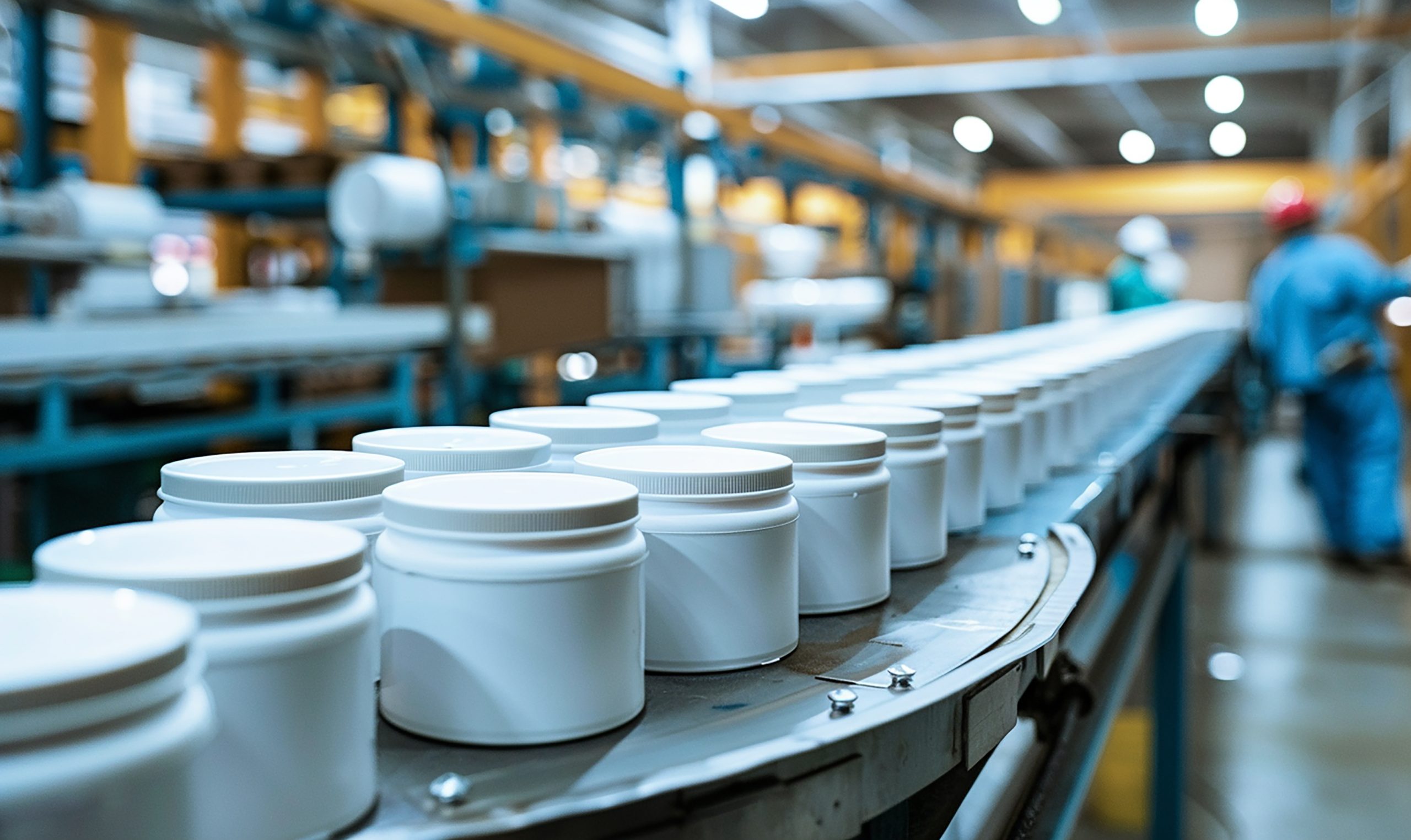
Manufacturing method impacts quality control, efficiency, traceability, and how easily you can scale output.
What Is Batch Manufacturing?
Batch manufacturing involves producing a specific quantity of product in a single run, known as a “batch.” Once that batch is completed, equipment is cleaned, inspected, and prepared for the next production cycle.
Each batch follows documented procedures, with quality checks performed at defined stages.
Key Characteristics
Strong control and traceability for varied supplement formats and formulations.
- Production in fixed quantities
- Clear batch traceability
- Defined start and finish cycles
- Quality testing per batch
Batch manufacturing is widely used in supplement production because it provides strong quality control and flexibility.
What Is Continuous Production?
Continuous production is a method where materials are processed without interruption. Raw materials continuously enter the system while finished product continuously exits.
This method is typically used in high-volume industries where demand is constant and large-scale output is required.
Key Characteristics
Built for efficiency and consistency at very large scale with automated control.
- Ongoing production flow
- Minimal downtime
- High-volume capacity
- Automated process control
Comparing the Two Methods
Flexibility
Batch manufacturing offers greater flexibility. It allows manufacturers to produce multiple formulations, adjust batch sizes, and accommodate customised products. Continuous production suits standardised, high-demand products with minimal variation.
Quality Control
Batch manufacturing supports detailed in-process checks and individual batch testing for traceability. Continuous systems rely heavily on automated monitoring and real-time process control.
Scalability
Batch production is ideal for start-ups and growing brands that may not require constant high-volume output. Continuous production works best for large-scale, repetitive manufacturing with stable demand.
Cost Considerations
Batch manufacturing may involve higher labour input per run, but it reduces risk for smaller volumes. Continuous production can lower cost per unit at high volumes but requires significant infrastructure investment.
Which Method Is Best for Supplements?
In the health supplement and complementary medicine industry, batch manufacturing is commonly preferred. Why? Because it offers:
- Greater formulation flexibility
- Strong traceability and documentation
- Controlled quality checks
- Adaptability for different dosage forms
This is particularly important when producing capsules, tablets, powders, creams, and other varied formats.
Making the Right Manufacturing Choice
The choice between batch manufacturing and continuous production depends on:
- Product type
- Market demand
- Required production volume
- Regulatory considerations
- Budget and long-term growth plans
For most supplement brands — especially those developing new formulations or operating in specialised markets — batch manufacturing provides the precision, control, and flexibility required for success.
Final Thoughts
Manufacturing method selection is not just an operational decision — it is a strategic one. Understanding how production systems work ensures better planning, cost management, and product consistency.
Partnering with an experienced manufacturer ensures your product is produced using the method that best aligns with your brand’s goals and quality expectations.